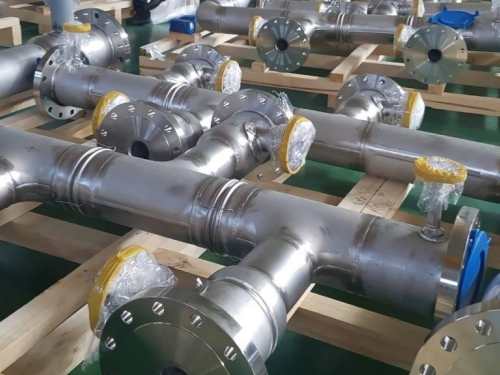
During manufacturing, transportation, and storage, carbon steel seamless pipes often accumulate contaminants such as rust, mill scale, welding slag, oil, and surface oxidation. If these impurities are not removed before installation or coating, they may affect pipeline cleanliness, corrosion resistance, coating adhesion, and long-term service performance.
For this reason, pickling and passivation are important pretreatment processes for carbon steel seamless pipes, especially in industrial piping systems requiring high internal cleanliness or corrosion protection.
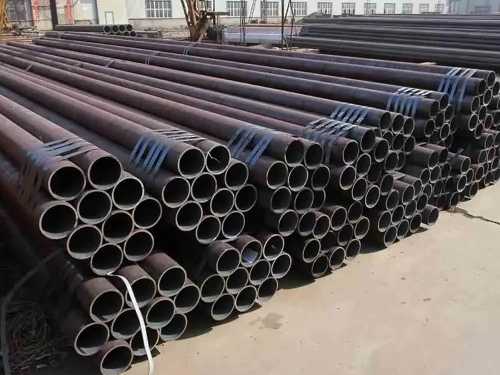
Why Are Pickling and Passivation Important?
Pickling and passivation mainly improve surface cleanliness, corrosion resistance, and coating performance.
- Removal of Surface Contaminants
Pickling effectively removes:
Rust
Oxide scale
Welding slag
Oil contamination
Surface oxidation
from both the inner and outer surfaces of the pipe.
This process is particularly important for:
Hydraulic pipelines
Lubrication systems
Industrial fluid transport lines
Precision mechanical piping
Residual contaminants may detach during operation and cause:
Valve blockage
Pump damage
Flow restriction
Internal contamination
Therefore, proper surface cleaning helps improve pipeline reliability and operational safety.
- Improved Short-Term Corrosion Protection
After pickling, passivation treatment forms a thin protective oxide film on the carbon steel surface.
The passivation layer is typically:
Black-gray
Bluish-gray
Dense and uniform
This protective film helps slow down corrosion caused by:
Moisture
Oxygen
Atmospheric exposure
Under normal storage conditions, passivation treatment can provide temporary rust prevention for approximately:
3 to 6 months
This is especially useful for pipes requiring:
Long-distance transportation
Temporary storage
Delayed installation
- Better Coating Adhesion
The surface after pickling becomes:
Cleaner
More uniform
Slightly roughened at the microscopic level
This improves the adhesion of subsequent anti-corrosion coatings such as:
Epoxy coatings
Industrial paint systems
Protective linings
Better adhesion helps reduce:
Coating peeling
Surface blistering
Premature coating failure
This is especially important for:
Outdoor pipelines
Structural steel systems
Storage tanks
Marine applications
Common Pickling and Passivation Methods
-
Immersion Method
In the immersion process, the pickling and passivation solution is usually diluted with water at a ratio of approximately 1:1.
The pipe or component is then fully immersed in the solution at room temperature.
Typical Processing Conditions
|
Process Parameter
|
Typical Range
|
|
Solution Ratio
|
1:1
|
|
Processing Temperature
|
Room temperature
|
|
Treatment Time
|
30–50 minutes
|
|
Severe Corrosion Treatment
|
Up to 4 hours
|
The treatment continues until a uniform black-gray passivation film forms on the surface.
Main Advantages
Uniform treatment
Good cleaning performance
Simple operation
Suitable for small components
Typical Applications
Small-diameter pipes
Pipe fittings
Valves
Scattered steel components
-
Circulating Spray Method
For long pipelines or systems that cannot be immersed, a circulating spray or circulation cleaning process is commonly used.
A circulation pump continuously moves the pickling and passivation solution through the pipeline.
Typical Processing Conditions
|
Process Parameter
|
Typical Range
|
|
Circulation Time
|
40–60 minutes
|
|
Cleaning Method
|
Internal circulation
|
|
Application Type
|
Long-distance pipelines
|
Main Advantages
Uniform internal cleaning
Suitable for large systems
Effective for complex pipelines
High internal cleanliness
Typical Applications
This method is commonly used for:
Hydraulic systems
Lubrication pipelines
Industrial process piping
Long-distance transport pipelines
Important Notes About Passivation
Unlike stainless steel, carbon steel does not form a permanent chromium-rich passive layer.
Therefore, the passivation film on carbon steel mainly provides short-term protection rather than long-term corrosion resistance.
If the pipes will be stored:
Outdoors
In humid environments
For extended periods
additional anti-corrosion protection is still required, such as:
Painting
Epoxy coating
Oil coating
Protective wrapping
Preventing Secondary Corrosion
After pickling and passivation, pipes should be:
Thoroughly rinsed with clean water
Properly dried
This helps prevent secondary corrosion caused by residual acid remaining on the steel surface.
Proper post-treatment handling is critical for maintaining surface quality.
How to Choose the Right Treatment Process
The appropriate pickling and passivation process depends on several factors:
Pipe material
Operating environment
Storage conditions
Cleanliness requirements
Subsequent coating process
Selecting the correct treatment method helps:
Extend pipeline service life
Improve corrosion resistance
Reduce maintenance costs
Improve coating durability
FAQ
- Why are carbon steel seamless pipes pickled?
Pickling removes rust, scale, oil, and welding residue from the pipe surface.
- What does passivation do for carbon steel pipes?
Passivation forms a temporary protective oxide film that improves short-term rust resistance.
- How long does passivation protection last?
Under normal storage conditions, protection typically lasts about 3–6 months.
- Can passivation replace painting?
No. Carbon steel passivation only provides temporary protection and usually requires additional coating for long-term outdoor use.
- What systems commonly require pickled pipes?
Hydraulic systems, lubrication pipelines, and industrial transport systems often require pickled and passivated pipes.

 English
 Español