Quick Answer
ASME B31 standards define the requirements for piping spool fabrication, including material selection, dimensional tolerances, welding procedures, inspection, and pressure testing to ensure safety, reliability, and compliance in industrial piping systems.
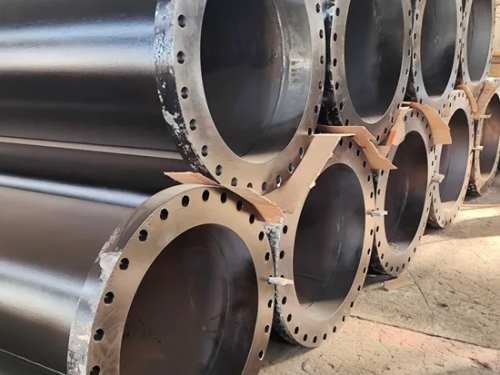
What Is a Piping Spool?
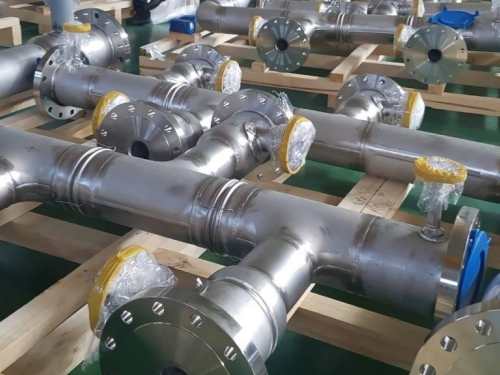
A piping spool is a prefabricated section of a piping system, typically manufactured in a workshop and then transported to the installation site. A standard spool assembly usually includes pipes, flanges, fittings (such as elbows, tees, and reducers), and sometimes valves.
Prefabrication of piping spools significantly reduces on-site welding, improves productivity, and ensures better quality control under controlled shop conditions.
Scope of ASME B31 in Spool Fabrication
Under ASME B31.3 (Process Piping), fabrication refers to all activities required to prepare piping components for assembly. This includes cutting, threading, grooving, forming, bending, and welding into subassemblies.
Although fabrication can be performed both in the workshop and on-site, shop fabrication is generally preferred because it provides better dimensional control, higher welding quality, and reduced installation risks.
Why Fabrication Tolerances Matter
Accurate fabrication is essential for successful field installation. Poor tolerance control can introduce unintended stresses into the piping system, which may lead to misalignment, leakage, or premature failure.
In practical terms, improper tolerances can result in:
Difficulty during installation and fit-up
Increased welding stress
Flange misalignment and sealing issues
Reduced system reliability and safety risks
Classification of Fabrication Tolerances
ASME B31.3 categorizes fabrication tolerances into several key types:
Linear tolerances: Control overall dimensions such as length and spacing
Angular and rotational tolerances: Ensure correct flange orientation
Weld alignment tolerances: Limit internal and external misalignment
Bending tolerances: Control ovality and deformation during bending
Key Fabrication Tolerances (ASME B31.3)
- Internal Misalignment at Welds
Proper alignment of pipe ends is critical for weld integrity.
NPS ≤ 24: max 1.6 mm
NPS ≥ 26: max 3.2 mm (if permitted by WPS)
- Linear Dimensional Tolerances
Typical allowable tolerances include:
Center-to-center: ±3 mm
Face-to-face: ±3 mm
Center-to-face: ±3 mm
Attachment location: ±3 mm
Core Requirements for Piping Spool Fabrication
-
Material Selection and Traceability
All materials must comply with applicable ASTM or ASME standards and match the design requirements for pressure, temperature, and corrosion resistance. Full traceability through Mill Test Certificates (MTCs) and proper identification (heat numbers, tagging) is mandatory.
-
Dimensional Control
Fabrication must follow approved isometric drawings and maintain strict dimensional tolerances. Proper alignment of fittings and branch connections is essential to avoid installation issues and operational stress.
-
Welding Requirements
Welding is a critical process in spool fabrication and must comply with ASME requirements:
Qualified Welding Procedure Specifications (WPS)
Certified welders per ASME Section IX
Controlled parameters such as heat input and temperature
Common welding methods include GTAW (TIG), SMAW, and SAW.
-
Inspection and NDT
To ensure quality and integrity, piping spools must undergo inspection and non-destructive testing (NDT), including:
Visual Testing (VT)
Radiographic Testing (RT)
Ultrasonic Testing (UT)
Magnetic Particle Testing (MT)
Dye Penetrant Testing (PT)
The extent of testing depends on the service category defined in ASME B31.3.
-
Pressure Testing
Before installation, spools are tested to verify strength and leak tightness:
Hydrostatic testing (most common)
Pneumatic testing (for special conditions)
-
Surface Treatment and Protection
After fabrication, surface treatment is applied to improve durability:
Sandblasting for surface preparation
Painting or coating for corrosion protection
Galvanizing for specific environments
Proper surface protection significantly extends service life, especially in harsh conditions.
Conclusion
Piping spool fabrication under ASME B31 standards is a highly controlled process that integrates material selection, precision manufacturing, qualified welding, and rigorous inspection. By strictly following these standards, manufacturers can deliver safe, reliable, and high-performance piping systems for demanding industrial applications.
FAQ
What is ASME B31 used for?
It provides standards for the design, fabrication, and inspection of pressure piping systems.
What is a piping spool?
A prefabricated section of piping assembled before installation.
Why are fabrication tolerances important?
They prevent misalignment, stress, and leakage during installation.
What tests are required for piping spools?
Common tests include NDT methods and pressure testing.
What is the most common pressure test?
Hydrostatic testing is the most widely used method.

 English
 Español