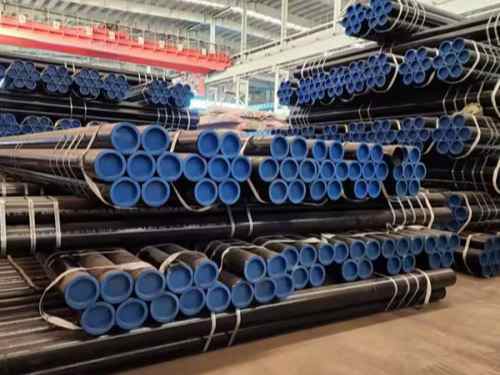
Do seamless steel pipes need galvanizing? The answer depends on two core variables:
Service environment
Required service life
For carbon steel and low-alloy seamless steel pipes, galvanizing is one of the most cost-effective corrosion protection methods available in structural and pipeline engineering.
What Is a Galvanized Seamless Steel Pipe?
A galvanized seamless steel pipe is a seamless carbon or low-alloy steel pipe coated with a protective zinc layer, typically through hot-dip galvanizing.
The zinc layer provides:
Barrier protection (isolates steel from oxygen and moisture)
Sacrificial anodic protection (zinc corrodes before iron)
Even if minor coating damage occurs, zinc continues protecting the exposed steel substrate through electrochemical action.
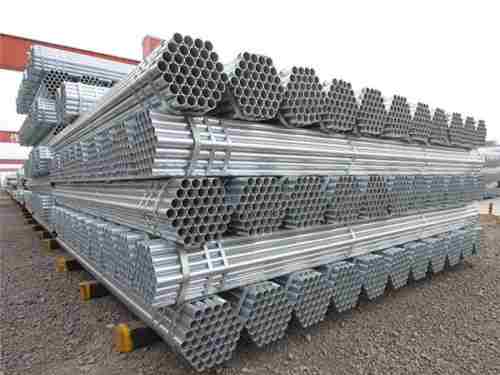
When Is Galvanizing Necessary or Strongly Recommended?
Galvanizing becomes a standard engineering requirement in corrosive or exposed environments.
- Outdoor Atmospheric Exposure
Typical applications:
Building steel structures
Bridges
Street lighting poles
Highway guardrails
These structures face:
Rain and snow
UV radiation
Industrial pollutants
Coastal salt spray
Hot-dip galvanized coating significantly extends service life in atmospheric corrosion environments.
- Buried Installations
Examples:
Underground water pipelines
Gas transmission lines
Utility conduits
Soil introduces:
Moisture
Microbial corrosion
Stray current corrosion
Galvanizing is often combined with cathodic protection systems for enhanced durability.
- High-Humidity Indoor Environments
Such as:
Greenhouses
Swimming pool structures
Coastal indoor facilities
High humidity accelerates oxidation of carbon steel. Zinc coating slows uniform corrosion and reduces maintenance frequency.
- Fire Safety Considerations
Compared to organic paint coatings:
Zinc coatings are non-combustible
They provide better fire performance stability
While galvanizing is not a fireproofing system, it offers improved flame resistance compared to standard coatings.
When Can Galvanizing Be Omitted?
In certain controlled or specialized conditions, galvanizing may not be required.
- Dry Indoor Environments
Examples:
Dry warehouses
Interior machine frames
Structural supports without moisture exposure
In such cases, simple primer coating or oil protection may be sufficient.
- Short-Term or Temporary Projects
Examples:
Temporary scaffolding
Construction staging systems
Although premium scaffolding systems are increasingly galvanized, short-duration projects may opt for more economical solutions.
- When Heavy-Duty Coatings Are Applied Later
If seamless pipes will receive:
Epoxy coatings
Polyurethane systems
Multi-layer anti-corrosion systems
Then surface preparation via sandblasting (Sa 2.5) is sufficient.
Galvanizing may:
Increase cost unnecessarily
Reduce coating adhesion performance
- High-Temperature or Chemically Aggressive Environments
Galvanized coatings have technical limitations:
Zinc softens and degrades above ~200°C
Unstable in strong acids or strong alkalis
In such environments, better alternatives include:
Heat-resistant alloy steel
Stainless steel
Specialized anti-corrosion linings
Cost vs. Lifecycle Consideration
Hot-dip galvanizing increases initial procurement cost but provides:
20–50+ years atmospheric corrosion resistance (depending on environment)
Reduced maintenance frequency
Lower lifecycle cost
Improved structural safety margin
For outdoor or humid applications, galvanizing remains one of the most economical long-term protection strategies.
FAQ
Do seamless steel pipes need galvanizing?
It depends on the environment. Outdoor, buried, or humid applications typically require galvanizing.
Why is galvanized pipe more corrosion resistant?
Because the zinc coating provides both barrier protection and sacrificial anodic protection.
Can galvanized pipe be used in high temperatures?
Not recommended above approximately 200°C.
Is galvanizing better than painting?
For long-term atmospheric exposure, hot-dip galvanizing usually provides longer service life and lower maintenance costs.
Conclusion
For most seamless carbon steel pipe structures exposed to atmospheric or humid conditions, hot-dip galvanizing offers the best balance of:
Cost efficiency
Durability
Safety performance
However, in dry indoor environments, temporary installations, or specialized coating systems, galvanizing can be omitted to optimize project budget.
In corrosion engineering, the correct decision is not universal — it must be based on environmental exposure classification, design life requirements, and total lifecycle cost analysis.

 English
 Español