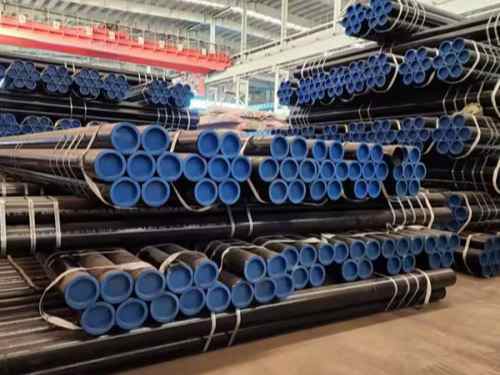
Carbon steel seamless pipes require anti-corrosion coating because their inner or outer surfaces are frequently exposed to corrosive media or harsh environments. Without proper protection, corrosion can lead to wall thinning, leakage, reduced flow efficiency, or even catastrophic failure.
Applying appropriate internal and external anti-corrosion coatings is a key measure to extend service life, ensure transport safety, and reduce maintenance costs.
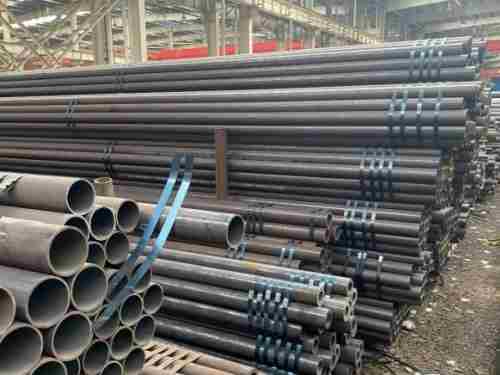
Key Situations Requiring Anti-Corrosion Coating for Seamless Steel Pipes
- Transporting Corrosive Media
When carbon steel seamless pipes are used to transport:
Crude oil and natural gas
Chemical fluids (acids, alkalis, saline solutions)
Coal chemical wastewater and waste residue
Fluids containing H₂S (hydrogen sulfide) or CO₂ (carbon dioxide)
the inner wall must be coated to prevent chemical and electrochemical corrosion.
Without internal coating protection, corrosion may cause pipe wall thinning, leakage, or bursting, especially under pressure.
- Exposure to Humid, Coastal, or Industrial Environments
Even if the transported medium itself is non-corrosive, external corrosion becomes a major risk when pipelines are installed in:
High-humidity environments
Coastal areas with salt spray
Industrial zones with atmospheric pollutants
Underground soil with corrosive ions
In such cases, external anti-corrosion coatings such as 3PE, epoxy powder coating (FBE), or polyurethane are required to isolate moisture and oxygen and prevent electrochemical corrosion.
- Applications Requiring High Cleanliness or Low Flow Resistance
In systems with strict cleanliness and efficiency requirements, including:
Food processing pipelines
Pharmaceutical pipelines
Ultrapure water systems
Natural gas transmission
Internal coatings (epoxy resin, polyurethane, etc.) serve dual purposes:
Provide corrosion protection
Smooth the inner wall, reducing flow resistance, improving transport efficiency, and preventing contamination caused by corrosion products
- Long-Distance, High-Pressure, or Critical Infrastructure Pipelines
For critical infrastructure such as:
Oil and gas trunk pipelines
Urban gas distribution networks
Heat transmission and district heating pipelines
carbon steel seamless pipes typically adopt high-performance coating systems, including:
3-layer polyethylene (3PE)
TPEP (Three-Layer Polyethylene Epoxy Powder Coating)
These coatings ensure long-term safe operation, even under conditions involving geological movement, complex soil environments, or limited cathodic protection.
- Special Industrial Environments (Coal Mines & Power Plants)
In demanding environments such as:
Underground coal mine water supply and drainage
Gas extraction pipelines
Fire sprinkler networks
Thermal power plant process water and waste residue return systems
Anti-corrosion seamless steel pipes have become the standard solution due to:
Strong corrosion resistance
Long service life
Reduced maintenance frequency
Lower leakage and safety risks
Summary: When Is Anti-Corrosion Coating Necessary for Carbon Steel Seamless Pipes?
In summary, whenever carbon steel seamless pipes are exposed to risks of:
Chemical corrosion
Electrochemical corrosion
Moisture, salt spray, or polluted atmospheres
Abrasion combined with corrosive media
a targeted internal and/or external anti-corrosion coating solution should be selected based on:
Medium characteristics
Operating pressure and temperature
Installation environment
Design service life requirements
Proper coating selection is essential for pipeline reliability, safety, and lifecycle cost control.
FAQ
Q1: Why do carbon steel seamless pipes need anti-corrosion coating?
A: To prevent corrosion from fluids or environmental exposure, extend service life, and ensure safe pipeline operation.
Q2: When is internal coating required for seamless steel pipes?
A: When transporting corrosive fluids, natural gas, chemicals, or media containing H₂S or CO₂.
Q3: When is external coating necessary?
A: When pipelines are exposed to humid, coastal, industrial, or underground soil environments.
Q4: What coatings are commonly used for oil and gas pipelines?
A: 3PE, FBE (epoxy powder), and TPEP coatings are widely used for long-distance and high-pressure pipelines.
Q5: Can coatings improve flow efficiency?
A: Yes. Internal coatings smooth the pipe wall, reduce friction, and improve fluid transport efficiency.

 English
 Español