Copper-nickel alloy pipe is a corrosion-resistant metal pipe widely used in marine, offshore, power generation, desalination, and industrial heat transfer systems. Manufactured primarily from copper and nickel, these pipes are designed to operate reliably in aggressive environments such as seawater, brine, and high-humidity conditions.
This article provides a structured overview of copper-nickel alloy pipes, covering their definition, typical grades, manufacturing processes, key advantages, and potential limitations in engineering applications.
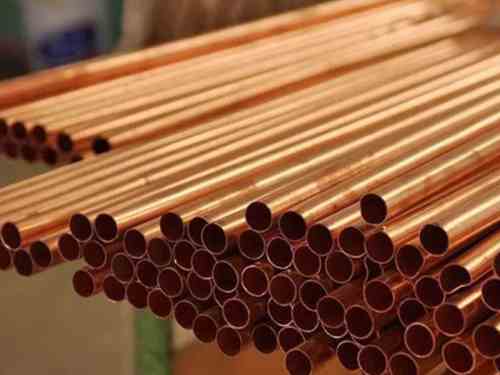
What Is a Copper-Nickel Alloy Pipe?
A copper-nickel alloy pipe, also known as a CuNi pipe or cupronickel pipe, is a metallic pipe produced from copper-nickel alloys containing copper as the base metal and nickel as the primary alloying element. Small additions of other elements may be included to improve strength, corrosion resistance, or weldability.
The most commonly used grades for piping systems include:
CuNi 90/10 pipe: 90% copper, 10% nickel
CuNi 70/30 pipe: 70% copper, 30% nickel
Compared with carbon steel or standard stainless steel pipes, copper-nickel alloy pipes exhibit superior resistance to seawater corrosion, erosion-corrosion, and biofouling, making them especially suitable for long-term fluid transport in harsh environments.
High-strength variants such as Cu-Ni-Al pipes or Cu-Ni-Sn pipes are used in applications requiring enhanced mechanical performance or pressure resistance.
How Are Copper-Nickel Alloy Pipes Manufactured?
Copper-nickel alloy pipes are produced through a series of controlled metallurgical and forming processes to meet strict dimensional, mechanical, and corrosion-resistance requirements.
Typical manufacturing steps include:
Melting and Alloying
Copper and nickel are melted together in precise proportions to ensure uniform chemical composition. Additional alloying elements may be added depending on pipe performance requirements.
Casting of Billets or Tubes
The molten alloy is cast into billets or hollow forms using continuous casting or centrifugal casting processes.
Hot Working
Hot extrusion, hot rolling, or hot piercing is used to form seamless copper-nickel alloy pipes with refined grain structure.
Cold Working
Cold drawing or cold rolling improves dimensional accuracy, surface finish, and mechanical strength, particularly for condenser and heat exchanger tubes.
Heat Treatment
Annealing is commonly applied to restore ductility and optimize corrosion resistance. Certain high-strength grades may undergo solution treatment or stress relieving.
Finishing and Inspection
Pipes are cut to length, straightened, machined if required, and subjected to non-destructive testing, dimensional inspection, and surface finishing.
Advantages of Copper-Nickel Alloy Pipes
Copper-nickel alloy pipes offer a combination of properties that make them ideal for fluid transport in demanding service conditions:
Excellent corrosion resistance, especially in seawater, brackish water, and chloride-rich environments
High resistance to erosion-corrosion, suitable for high-velocity fluid flow
Natural anti-biofouling properties, reducing marine organism attachment
Good thermal conductivity, making them ideal for heat exchangers and condensers
Strong weldability and formability, facilitating installation and maintenance
Long service life with low maintenance costs
High recyclability, supporting sustainable piping systems
These advantages explain their widespread use in seawater cooling lines, offshore platforms, shipbuilding, desalination plants, and power station condensers.
Limitations of Copper-Nickel Alloy Pipes
Despite their performance benefits, copper-nickel alloy pipes also present certain challenges:
Higher material cost compared to carbon steel pipes, influenced by copper and nickel market prices
Lower machinability than some stainless steel or aluminum pipes
Increased tool wear and reduced cutting speeds during pipe machining
Chip control difficulties, particularly during cutting or threading operations
These factors should be considered during material selection, cost estimation, and fabrication planning.
Frequently Asked Questions
Q1: What are copper-nickel alloy pipes mainly used for?
Copper-nickel alloy pipes are mainly used for seawater piping, heat exchangers, condensers, desalination systems, and offshore fluid transport.
Q2: Are copper-nickel alloy pipes suitable for seawater systems?
Yes. Copper-nickel alloy pipes are specifically designed for long-term use in seawater due to their excellent corrosion and biofouling resistance.
Q3: What is the difference between CuNi 90/10 pipe and CuNi 70/30 pipe?
CuNi 70/30 pipes offer higher strength and better erosion-corrosion resistance than CuNi 90/10 pipes, especially in high-velocity seawater flow.
Q4: Do copper-nickel alloy pipes require internal coating?
In most seawater applications, copper-nickel alloy pipes do not require internal coatings due to their inherent corrosion resistance.
Q5: Can copper-nickel alloy pipes be welded on site?
Yes. Copper-nickel alloy pipes have good weldability and can be welded on site using appropriate filler metals and procedures.

 English
 Español