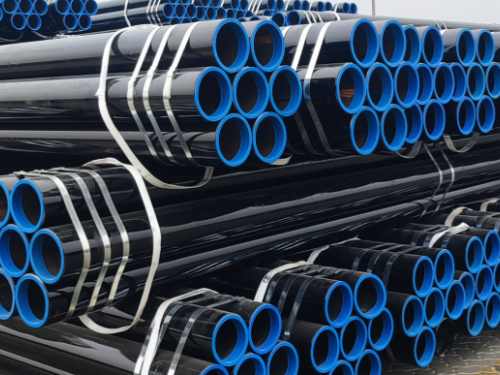
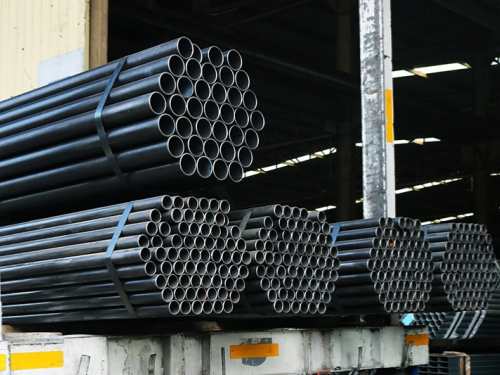
Galvanized steel pipe is divided into cold galvanized steel pipe and hot-dip galvanized steel pipe
Hot-dip galvanized steel pipes are widely used in construction, machinery, coal mines, chemicals, electric power, railway vehicles, automobile industry, highways, bridges, containers, sports facilities, agricultural machinery, petroleum machinery, prospecting machinery, greenhouse construction and other manufacturing industries.
Galvanized steel pipe is a welded steel pipe with a hot-dip galvanized or electro-galvanized layer on the surface. Galvanizing can increase the corrosion resistance of steel pipes and prolong the service life. Galvanized pipes are widely used. In addition to being used as pipeline pipes for general low-pressure fluids such as water, gas, and oil, they are also used as oil well pipes and oil pipes in the petroleum industry, especially in offshore oil fields, and oil heaters and condensers in chemical coking equipment. Pipes for coolers, coal distillation washing oil exchangers, and pipes for trestle piles, supporting frames for mine tunnels, etc.
Hot dip galvanized pipe
Hot-dip galvanized pipe is to make the molten metal react with the iron matrix to produce an alloy layer, so that the matrix and the coating are combined. Hot-dip galvanizing is to pickle the steel pipe first. In order to remove the iron oxide on the surface of the steel pipe, after pickling, it is cleaned in the tank of ammonium chloride or zinc chloride aqueous solution or mixed aqueous solution of ammonium chloride and zinc chloride, and then sent to the in the hot dip bath. Hot-dip galvanizing has the advantages of uniform coating, strong adhesion and long service life. The hot-dip galvanized steel pipe substrate undergoes complex physical and chemical reactions with the molten bath to form a corrosion-resistant zinc-iron alloy layer with a tight structure. The alloy layer is integrated with the pure zinc layer and the steel pipe substrate, so it has strong corrosion resistance.
Cold galvanized pipe
Cold galvanized pipe is electro-galvanized, and the amount of galvanized is very small, only 10-50g/m2. Its corrosion resistance is much different than that of hot-dip galvanized pipe. In order to ensure the quality, most regular galvanized pipe manufacturers do not use electro-galvanized (cold plating). Only those small enterprises with outdated equipment use electrogalvanizing, and of course their prices are relatively cheap. The Ministry of Construction has officially issued an order to eliminate cold galvanized pipes with outdated technology, and not to use cold galvanized pipes for water and gas pipes. The galvanized layer of cold galvanized steel pipe is an electroplating layer, and the zinc layer is independently layered with the steel pipe substrate. The zinc layer is thin, and the zinc layer simply adheres to the steel pipe substrate and is easy to fall off. Therefore, its corrosion resistance is poor. In newly built houses, it is forbidden to use cold galvanized steel pipes as water supply pipes.

 English
 Español