Why Is PSL2 Steel Pipe Becoming More Important?
In modern pipeline projects, selecting the right steel pipe is essential for maintaining pipeline integrity, operational safety, and long-term reliability. As projects expand into higher-pressure applications and more demanding operating environments, buyers increasingly consider API 5L PSL2 steel pipe instead of relying solely on the basic requirements of PSL1.
PSL2 stands for Product Specification Level 2 under API 5L. Compared with PSL1, it introduces tighter controls over chemical composition and mechanical properties, additional testing requirements, and more comprehensive traceability provisions. These requirements provide greater quality assurance for pipeline applications where material consistency and documented inspection are particularly important.
However, PSL2 is not automatically the right choice for every project. The selection should be based on operating conditions, pipeline design, applicable specifications, and project requirements.
PSL1 vs PSL2 Steel Pipe: What Are the Main Differences?
Both PSL1 and PSL2 steel pipes are manufactured under API 5L, but they differ in their technical and quality requirements.
|
Comparison Item
|
API 5L PSL1 Steel Pipe
|
API 5L PSL2 Steel Pipe
|
|
Chemical Composition
|
General composition limits
|
Tighter chemical composition controls
|
|
Carbon Equivalent
|
Less restrictive requirements
|
More controlled limits to support weldability
|
|
Mechanical Properties
|
Basic tensile requirements
|
Additional requirements and tighter controls
|
|
Impact Testing
|
Not generally required by the PSL1 baseline
|
Required under applicable PSL2 requirements
|
|
Non-Destructive Testing
|
Requirements depend on pipe type and specification
|
More comprehensive inspection requirements
|
|
Traceability
|
Standard identification and documentation
|
Enhanced traceability and documentation
|
|
Sour Service
|
Requires separate suitability assessment
|
Specific sour-service options may be specified
|
The exact requirements depend on the applicable API 5L edition, pipe manufacturing method, grade, dimensions, and supplementary project specifications.
Why Choose API 5L PSL2 Steel Pipe for Demanding Projects?
- More Controlled Chemical Composition
Chemical composition directly affects the strength, toughness, and weldability of steel pipe. PSL2 introduces stricter limits for several chemical elements and carbon equivalent values compared with PSL1.
Better control of these parameters helps manufacturers maintain more consistent material properties and supports welding performance during pipeline construction.
- Additional Impact Testing Requirements
Impact toughness is important for pipelines exposed to low temperatures, dynamic loading, or demanding operating conditions.
API 5L PSL2 includes impact testing requirements under specified conditions. Charpy V-notch testing is commonly used to evaluate a steel pipe's resistance to impact loading and its ability to absorb energy before fracture.
For projects with specific minimum operating temperatures, buyers should confirm the required test temperature and acceptance criteria in the purchase specification.
- More Comprehensive Inspection and Quality Control
Steel pipe quality depends on more than chemical composition and tensile strength. Inspection and testing are also essential for identifying potential manufacturing defects.
Depending on the pipe type and applicable requirements, PSL2 production may involve non-destructive testing of the pipe body and weld seam, dimensional inspection, and additional verification procedures.
These measures help improve manufacturing consistency and provide greater confidence in the finished line pipe.
- Improved Traceability
Traceability is particularly important in large-scale pipeline projects involving multiple production batches and delivery schedules.
PSL2 requires more detailed identification and documentation, helping buyers connect finished steel pipes with relevant manufacturing and inspection records. This supports quality verification, material management, and project documentation.
- Options for Specialized Service Conditions
Some pipeline projects involve sour service, low temperatures, or other challenging operating conditions. PSL2 provides a specification framework that can be supplemented with additional requirements for these applications.
However, PSL2 alone does not establish sour-service suitability. Buyers should specify the required sour-service conditions and applicable supplementary requirements separately.
How to Ensure the Quality of PSL2 Steel Pipe
For buyers and project contractors, verifying PSL2 compliance should be part of the procurement and inspection process.
Key quality control steps include:
Chemical Composition Analysis: Verify the material chemistry and carbon equivalent against the specified requirements.
Mechanical Testing: Check tensile properties and other required mechanical test results.
Charpy V-Notch Impact Testing: Confirm impact test results meet the specified temperature and energy requirements.
Non-Destructive Testing: Verify the required inspection coverage for the pipe body and weld seam.
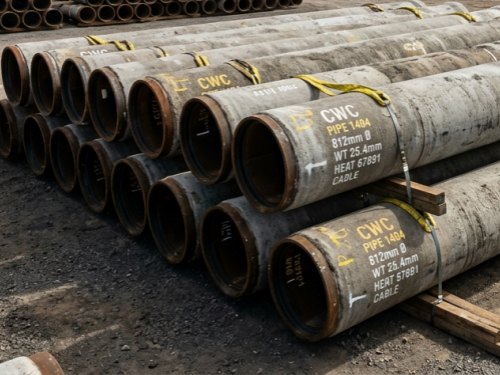
Documentation and Traceability: Review pipe markings, heat numbers, and Mill Test Certificates to confirm material identification and compliance.
The inspection scope should always follow the purchase order, applicable API 5L edition, and project Inspection and Test Plan (ITP).
What Should Buyers Consider When Purchasing X70 PSL2 Steel Pipe?
API 5L X70 PSL2 steel pipe is commonly considered for demanding line pipe applications where high strength and controlled material properties are required. Before placing an order, buyers should confirm several key specifications:
Standard and Specification Level: API 5L PSL2
Steel Grade: X70 or another project-approved grade
Manufacturing Process: Seamless, LSAW, or SSAW, as required by the design
Dimensions: Outside diameter and wall thickness
Delivery Condition: As specified in the project requirements
Testing Requirements: Chemical analysis, mechanical testing, impact testing, and NDT
Documentation: MTC, inspection records, and traceability information
Additional Requirements: Sour service, low-temperature performance, coating, or other supplementary specifications where applicable
Providing complete technical requirements in the RFQ helps suppliers evaluate the order accurately and reduces the risk of specification mismatches.
Continental Steel: Steel Pipe Supply for Pipeline Projects
Selecting a steel pipe supplier involves more than comparing material prices. Buyers should also evaluate product specification compliance, manufacturing quality control, inspection documentation, and delivery coordination.
Continental Steel supports steel pipe procurement for industrial and pipeline applications, with attention to project specifications and customer requirements. For API 5L PSL2 line pipe enquiries, buyers should provide the required grade, dimensions, manufacturing process, testing scope, and delivery conditions to facilitate accurate technical evaluation.
FAQ
- What is the difference between PSL1 and PSL2 steel pipe?
PSL2 has stricter chemical composition and mechanical property controls, additional testing requirements, and enhanced traceability compared with PSL1.
- Is PSL2 steel pipe stronger than PSL1?
Not necessarily. The strength requirements depend on the specified steel grade. PSL2 mainly introduces tighter quality and testing requirements.
- Is impact testing mandatory for API 5L PSL2?
API 5L PSL2 includes impact testing requirements under specified conditions. The applicable test temperature and acceptance criteria should be confirmed against the relevant specification.
- Is X70 PSL2 steel pipe suitable for high-pressure pipelines?
X70 PSL2 may be selected for demanding pipeline applications, subject to engineering design, operating conditions, and project requirements.
- Does PSL2 steel pipe automatically meet sour service requirements?
No. Sour service suitability requires additional material and testing requirements beyond the PSL2 designation.

 English
 Español